The leaks that do the most damage are usually the ones nobody can see. A pinhole in a hot water line under the slab, a fitting weeping inside a wall, a buried supply line cracked somewhere between the meter and the house. By the time a stain spreads across the drywall or a puddle forms by the baseboard, water may have been running for weeks.
Slab leak repair in Bullhead City should start well before anyone picks up a saw. The first task is proving there is a leak at all. The second is pinning it to one spot with equipment designed to take the guesswork out. Bullhead City Plumbing Pros answers 24/7 in English or Spanish and routes your call to a local plumber for hidden leak location, slab leaks, sewer gas diagnostics, and whole-house repiping when patching stops making sense.
The Ten-Minute Meter Test
Before you call anyone, there is a simple check you can do. Turn off every faucet, toilet, irrigation zone, and water-using appliance. Then find the water meter and look for its low-flow indicator, usually a small triangle or dial. Watch it for about ten minutes. If it keeps moving, water is leaving the system somewhere.
That test is worth running whenever you notice any of these:
- A water bill that jumped with no change in how the household uses water.
- A warm patch on a tile floor, which often means a hot water line is leaking under the slab.
- The sound of running water when everything is off.
- Damp spots at the base of an interior wall, along baseboards, or on exterior stucco.
Sewer Gas in a House That Sat Empty
A sewage smell with no visible leak is one of the most confusing problems a homeowner can face. In Bullhead City, the most common cause is simple. Every drain has a P-trap that holds a little water to block sewer gas. When a winter home sits closed up through a summer well past 110 degrees, that water evaporates, and gas from the drain system drifts straight into the house.
Running water in every sink, tub, shower, and floor drain usually solves it. When it does not, smoke testing finds the real source. Non-toxic fog is pushed through the drain and vent system at low pressure and appears wherever the system is open to the living space. One pass can reveal:
- Dry or missing P-traps
- Unsealed vent penetrations behind drywall
- Cracked drain lines inside wall cavities
- Failed toilet wax rings or broken closet flanges
How a Leak Gets Found Without Breaking Tile
Once a leak is confirmed, a pressure test separates supply-side problems from drain-side ones. Then the locating starts.
| Detection Method | How It Works | Best Used For |
|---|---|---|
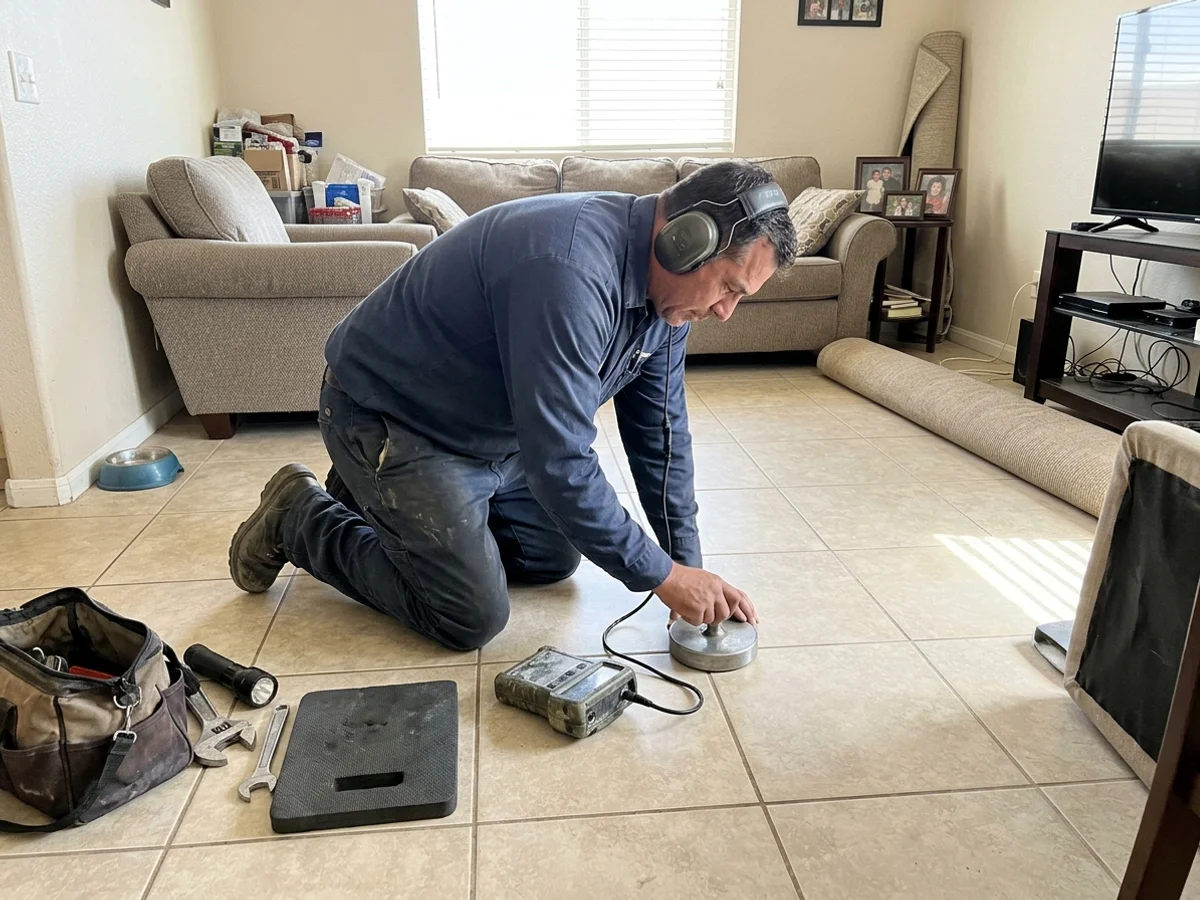
| Acoustic listening | Amplifies the sound of pressurized water escaping | Leaks under concrete slabs |
| Thermal imaging | Shows small surface temperature changes | Hot water leaks under hard flooring |
| Electromagnetic tracing | Follows a signal along a metal pipe | Mapping line routes before any cut |
Concrete gets opened at the located spot and nowhere else. One small access cut is a very different repair from tearing out a whole hallway of tile.
What Wears Out Supply Lines Here
The local water supply is tied to the Colorado River and carries a heavy mineral load. Over the years, hard water leaves deposits inside pipe, and older copper can develop pitting that eventually becomes a pinhole. Older neighborhoods may still have galvanized lines that corrode inward and choke pressure at every tap, and some homes still have gray polybutylene, which is known for failing at the fittings.
Heat adds to the strain. Lines running through hot attics, exterior walls, and garages spend months at high temperature. Seasonal vacancy is the last piece: a leak that starts in May in an empty house can run until the owners return in the fall.
Patch, Reroute, or Repipe?
- Spot repair: Open the slab at the located point and fix that section. Best for one leak in an otherwise sound line.
- Reroute: Abandon the leaking run under the slab and run a new line through the attic or walls. Often the better value when that line has leaked before.
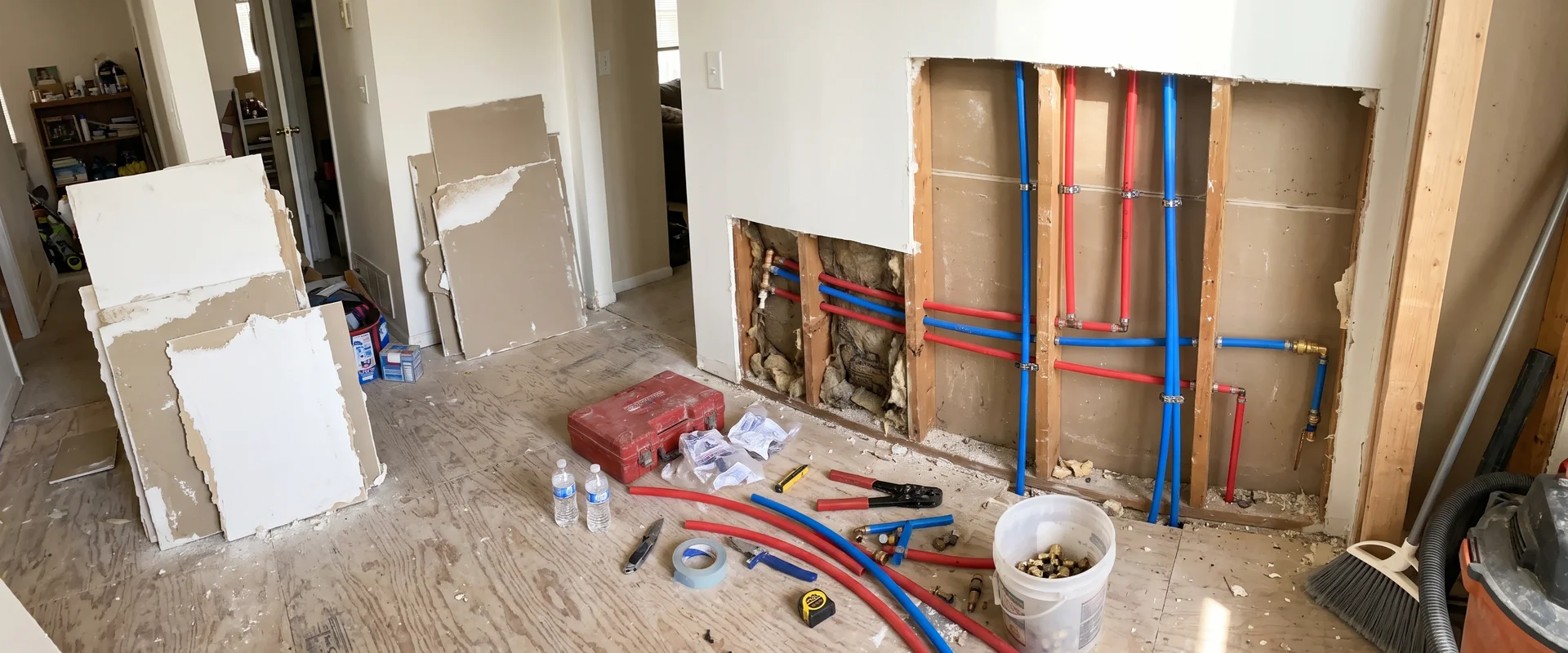
- Whole-house repipe: Replace the supply system. The right call when pressure is low everywhere, water runs rusty on first draw, or pinholes keep turning up in different rooms.
| Piping Material | Strengths | Good Fit For |
|---|---|---|
| PEX | Flexible, fewer wall openings, does not pit in hard water | Most whole-house repipes in hard water |
| Copper | Rigid, long service history | Exposed runs and layouts suited to rigid pipe |
Larger repiping work typically needs a permit, so ask about permits when you discuss the job. After any repair, the system gets pressure tested and the meter rechecked before walls or floors are closed.
What to Expect on a Leak Detection Visit
You call 928-555-0100 and an automated bilingual assistant takes down what you are seeing, whether the meter test showed movement, and how long the house has been occupied. The details go to a local plumber, who confirms the leak, locates it, and lays out the repair options before anything is opened. Request a free estimate, and ask about any service call fee before you book.
Leak detection, smoke testing, and repiping are available across Bullhead City, Fort Mohave, and Mohave Valley. Our leak and repiping guides go deeper on telling these situations apart.