That rotten-egg smell in a hallway or bathroom is hydrogen sulfide, one of the gases in the sewer system. Your plumbing is built to keep it out with two simple defenses: water seals in every trap, and vent pipes that keep those seals from being sucked dry. When you smell it, one of those defenses has failed. The list of usual suspects is short, and the most common one costs nothing to fix.
Do this before anything else
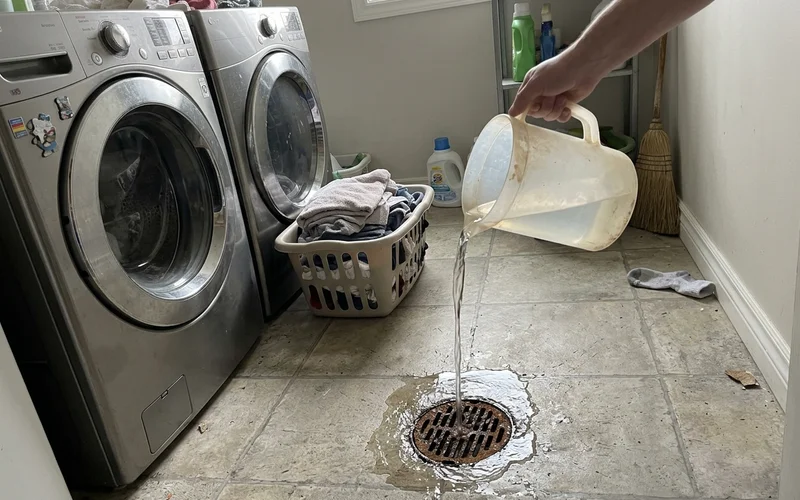
- Pour a quart or two of water into every drain you rarely use: guest sinks and tubs, laundry standpipes, garage and laundry floor drains.
- Flush every toilet once.
- Wait a full day with the house aired out.
If the smell is gone, it was a dry trap. If it comes back with every trap full, use the list below.
Causes, ranked by how often they turn out to be the answer
| Rank | Cause | Typical clue | Who fixes it |
|---|---|---|---|
| 1 | Dry trap | Smell near an unused drain, especially after time away | You, with a cup of water |
| 2 | Failed toilet wax ring | Toilet rocks slightly; smell or dampness at the base | Plumber |
| 3 | Missing trap | Persistent smell nobody can trace, often in newer construction | Plumber |
| 4 | Unsealed or cracked vent joint | Smell comes and goes with wind, AC, or doors | Plumber, usually with a smoke test |
| 5 | Cracked drain line | Smell plus slow drains or damp soil at the foundation | Plumber, camera inspection |
Dry traps and the desert summer
In Bullhead City this is the top cause by a wide margin. Summers run well past 110 degrees, many homes sit closed for months, and a few inches of water in a trap simply evaporates. Even occupied homes have drains that go untouched for weeks. Before leaving for the season, add a tablespoon of mineral oil on top of the water in rarely used drains to slow evaporation.
Wax rings
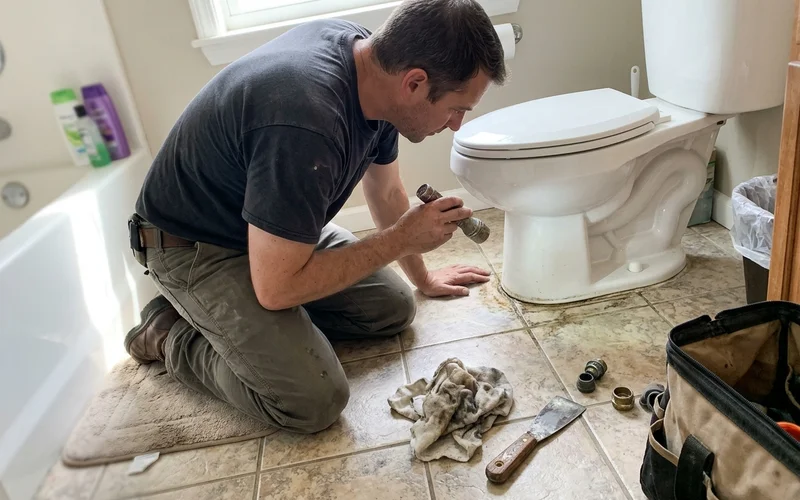
If a toilet moves even a little when you sit on it, the wax seal under it is likely broken. Gas, and often a slow leak, escapes at the floor line. Check every toilet.
Missing traps and open vent joints
These turn up more often than people expect. A trap gets skipped during construction, or a vent fitting inside a wall is never properly glued. The smell is persistent or intermittent, and there is no visible leak anywhere.
Cracked drains
In older homes, a cracked drain in a wall or under the slab can push gas through soil and into the house. If slow drains and damp soil are part of your picture, read broken sewer pipe under a slab.
Older homes, newer homes, and winter homes
| Home type | Most likely sources |
|---|---|
| Older neighborhoods | Cracked or corroded drains, failed laterals |
| Newer subdivisions | Missing traps, unsealed vent joints, failed air admittance valves |
| Seasonal and winter homes | Dry traps after months closed |
| Manufactured homes | Dry traps, loose drain connections under the home |
Local expert insight
A smell that comes and goes is still a real opening. It usually depends on air pressure: the AC kicking on, a door closing, wind across the roof vent. The gap is always there; only the conditions change.
How a smoke test pins it down
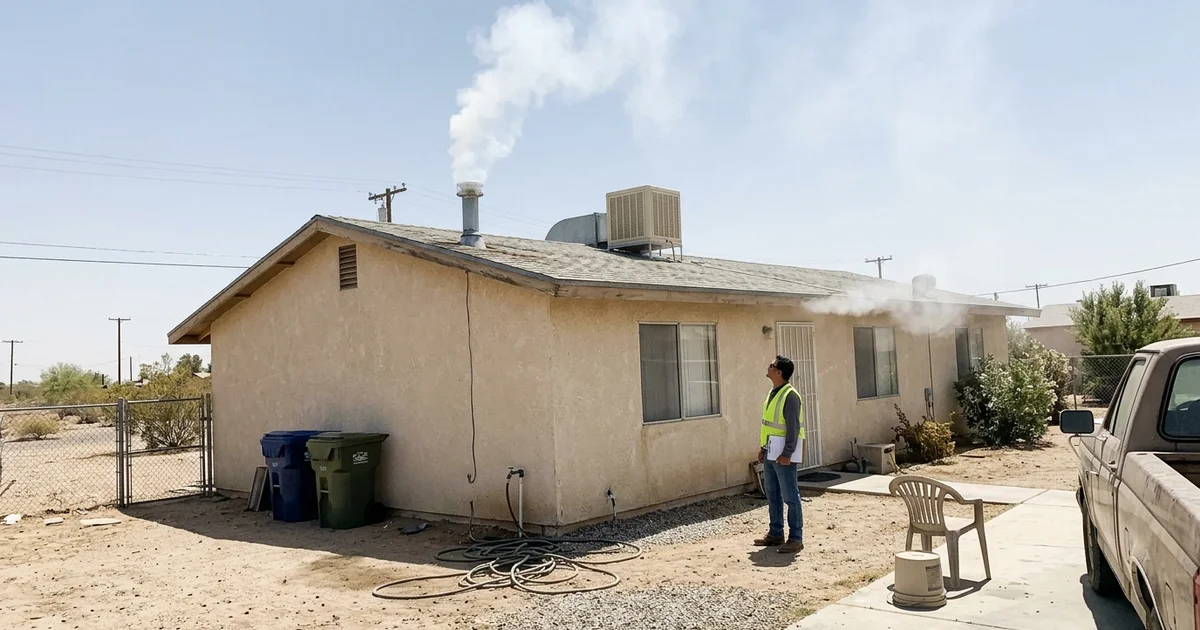
When refilling the traps does not solve it, a smoke test usually does. Non-toxic fog is blown into the drain and vent system under low pressure. Fog rising from the roof vents shows the system is full. Fog appearing anywhere inside, around a toilet base, at a drain, or through a crack in a wall, shows exactly where gas is getting in. That replaces guesswork and exploratory wall cutting with a direct answer.
Notes that help the plumber
- Which rooms smell, and whether it is constant or on and off
- Whether it is worse in the morning, when the AC runs, or after showers
- Whether you refilled the unused drains, and whether that helped
- Whether any toilet moves when you sit on it
- How long the house sat empty, if it did
Sewer gas diagnostics are part of our leak detection and sewer gas diagnostics service. If the smell is strong or getting worse, air out the house and call Bullhead City Plumbing Pros at 928-555-0100, answered any hour in English or Spanish.