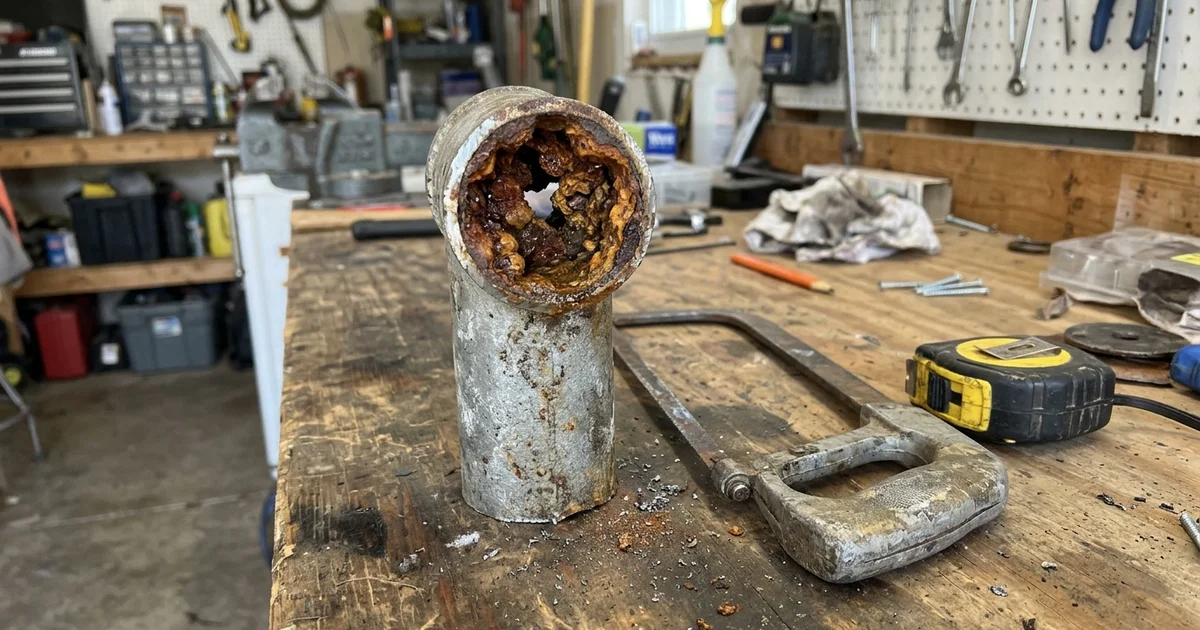
Old supply pipe almost never fails in one dramatic event. It fades: a weaker shower, a rusty first glass in the morning, a pinhole in the garage, then another one in a different room a few months later. By the time you are reading about repiping, you probably already suspect that patching has stopped working. This guide gives you clear criteria for the call and the choice of material.
Is it the system or just one fixture?
Start here, because the answer decides everything else.
| Sign | Points to one fixture | Points to the whole system |
|---|---|---|
| Weak flow at a single faucet | Yes, often an aerator or cartridge | |
| Weak flow at every fixture | Yes | |
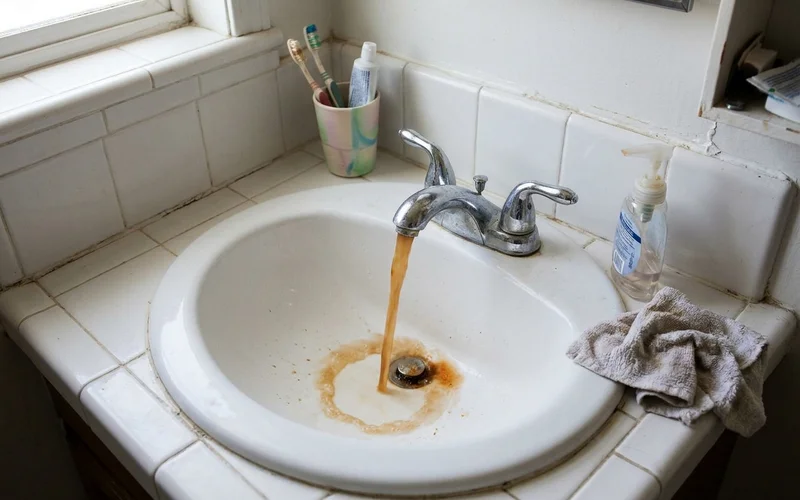
| Tinted water for the first few seconds each morning | Yes | |
| Pressure drops hard when a second tap opens | Yes | |
| Rust or weeping at threaded joints | Yes | |
| Pinhole leaks in more than one place within a year or two | Yes |
Two or more in the right-hand column, and the pipe is the problem. If you also suspect leaks under the floor, our guide to slab leak signs covers how to confirm them.
The three aging materials you are likely to find
Galvanized steel. Gray metal pipe with threaded joints, found in older homes. The zinc coating wears away from the inside over decades, and the bare steel rusts into lumps that narrow the pipe. Hard water speeds it up, because mineral scale settles on top of the rust and closes the passage faster. Typical warning: years of slowly falling pressure and rusty first-draw water.
Polybutylene (PB). Flexible gray, blue, or black plastic, often stamped PB2110. It becomes brittle with age and tends to fail at fittings, sometimes with little warning. If you find it, plan to replace it rather than patch it.
Corroded copper. Copper can last a long time, but decades of hard, mineral-heavy water can pit it from the inside. Once one pinhole shows up in a run, others in that same run often follow.
Replacement materials compared
| Criteria | PEX | Copper | Keep patching |
|---|---|---|---|
| Wall openings needed | Fewer; flexible runs go around obstacles | More; rigid runs and soldered joints | None now, more later |
| Hard-water pitting | Not affected | Can pit over decades | Already failing |
| Minor ground movement | Tolerates it | Rigid | Rigid or brittle |
| Install time | Faster | Slower | Each repair adds up |
| Relative cost | Lower | Higher | Rising with every repair |
| Shutoff control | Manifold allows a valve per line | Conventional branch layout | Unchanged |
For most older Bullhead City homes, PEX is the practical choice. Copper is not a mistake; some owners prefer it, and it installs cleanly where runs are straight and open. Under-slab work in particular is often rerouted through walls or the attic rather than relaid under the concrete.
Whole-house or spot repair?
A spot repair fits when one section failed for an obvious reason, everything else has good pressure and clear water, and the house is not plumbed throughout in galvanized or PB.
A whole-house repipe fits when pressure is down everywhere, first-draw water is tinted, leaks have shown up in several places, or the house is plumbed in polybutylene.
Each spot repair carries its own access, labor, and drywall patching, and after three of them you still own old pipe. One planned repipe usually comes out ahead before the third emergency.
Local expert insight
If you own a winter home with aging pipe, schedule the repipe for the months you are in town. A pinhole that starts while the house is closed through a 110-degree summer can run for weeks before anyone sees it.
What a repipe looks like, day by day
- Planning. Confirm the layout, the fixture count, and whether a permit is required and who arranges it.
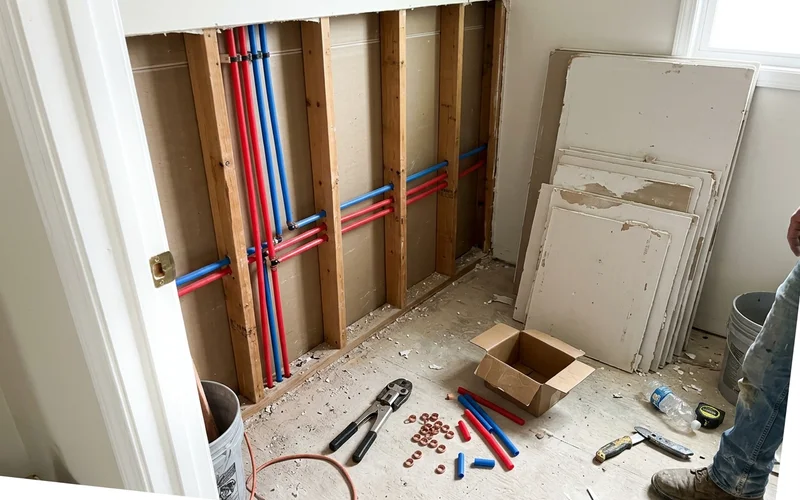
- Access cuts. Small, patchable openings at planned points, not whole walls.
- New runs. Lines to each fixture, often from a central manifold so each line can be shut off on its own.
- Switch-over. Water is off for part of the day while fixtures are connected, and is usually back on each evening.
- Pressure test. Every connection is tested before walls close.
- Patching. Drywall repair and texture; confirm whether it is in the estimate.
Most single-family repipes take one to five working days depending on size and access. Remodeling a kitchen or bath? That is the cheapest moment to repipe, since much of the wall access is already part of the project.
Confirm before you quote
Before getting repipe quotes, make sure the problem really is system-wide. That is part of leak detection and repiping work: pressure testing and checking for hidden leaks first. Request a free estimate from Bullhead City Plumbing Pros, and ask about any service call fee before booking. Calls to 928-555-0100 are answered 24/7 in English or Spanish, and your details go to a local plumber.