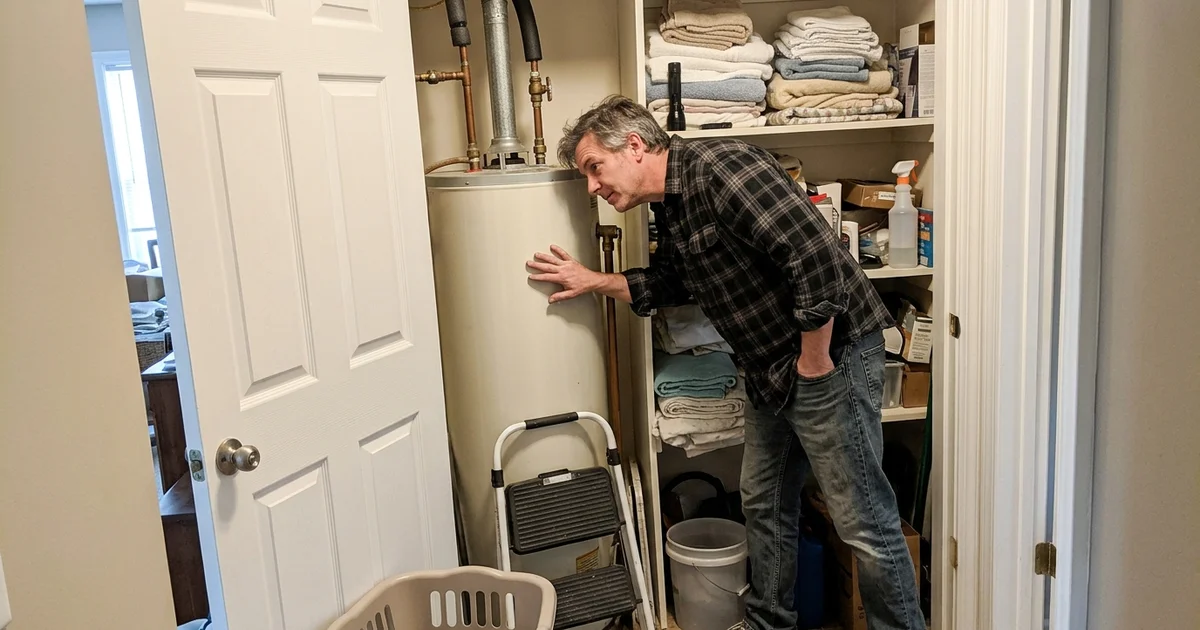
You pull into your Bullhead City driveway after the long drive, and the house has been closed since spring. It is tempting to open the main, crank the AC, and unpack. Hold off for twenty minutes. Anything that failed over the summer is about to be put back under pressure, and you are the only one in a position to catch it before it spreads.
Stage 1: Read the house before the water is on
Leave the main closed and walk every room.
- Ceilings and wall bases: stains, bubbling paint, or swollen baseboards.
- Cabinet floors: under each sink, feel for soft or warped wood.
- Around the water heater: rust trails, mineral crust, or a dried water line on the floor.
- Your nose: a sewer smell near a drain is common and usually just a dry trap. A musty, mildew smell is different. It suggests water has been sitting somewhere for a while.
If you find active damage, stop here and call before opening the water.
Stage 2: The meter test
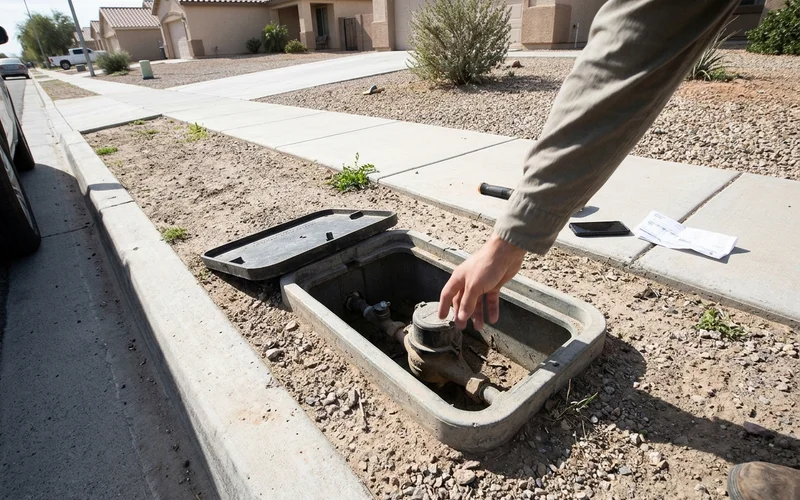
This is the most useful fifteen minutes of the whole return.
- Confirm every faucet, toilet valve, ice maker, and irrigation zone is off.
- Open the house main slowly, a little at a time, and listen for hissing.
- Note the meter reading and the low-flow indicator, the small dial or triangle that spins with even a trickle.
- Wait fifteen minutes without using any water.
- Check again.
| Result | What it means | Next step |
|---|---|---|
| Nothing moved | No leak on the supply side | Continue to Stage 3 |
| Indicator crept slowly | Small leak, often a toilet fill valve | Check each toilet with a dye test |
| Dial clearly moved | Real leak somewhere past the meter | Close the main and call |
| Moved and you hear running water | Possible slab or wall leak | Close the main and call |
Stage 3: Wake up the drains
Run water into every drain for about a minute, including floor drains and the tub nobody uses. That refills the traps and usually clears a summer sewer smell by the next day. If the smell comes back with every trap full, see sewer smell from dry P-traps for the other causes.
Stage 4: Restart the water heater in the right order
- Open the cold supply valve and let the tank fill completely.
- Open a hot faucet nearby until it runs steadily with no sputtering. This pushes air out and confirms the tank is full.
- Only then relight the gas or switch the breaker back on.
- Check the base and the top fittings for drips over the next hour.
A tank that sat all summer on hard Colorado River water may pop or rumble as it heats, because scale settled on the bottom. Once is not alarming. Constant noise, rusty hot water, or moisture at the base is worth a service visit, and the start of the season is a good time for a flush.
Stage 5: Fixtures
Turn on each faucet and flush each toilet. Toilets that sat for months often have dried flappers that no longer seal, which shows up as a refill every so often with nobody using it.
Local expert insight
A slab leak in an empty house can run all summer. If the meter moved and you cannot find a dripping fixture, do not start pulling up flooring. Pinpointing it takes listening and thermal equipment, and guessing usually means a broken floor and a leak that is still running.
When to call
Call if the meter moves with everything off, if you find stains or soft spots, if one patch of floor feels warm, if you hear water running with every fixture closed, or if the water heater leaks. Those are the signs covered in slab leak warning signs.
A call to 928-555-0100 is answered at any hour in English or Spanish by the automated bilingual assistant at Bullhead City Plumbing Pros, and the details go to a local plumber. Request a free estimate and ask about any service call fee before booking. Hidden leaks are handled through our leak detection work.