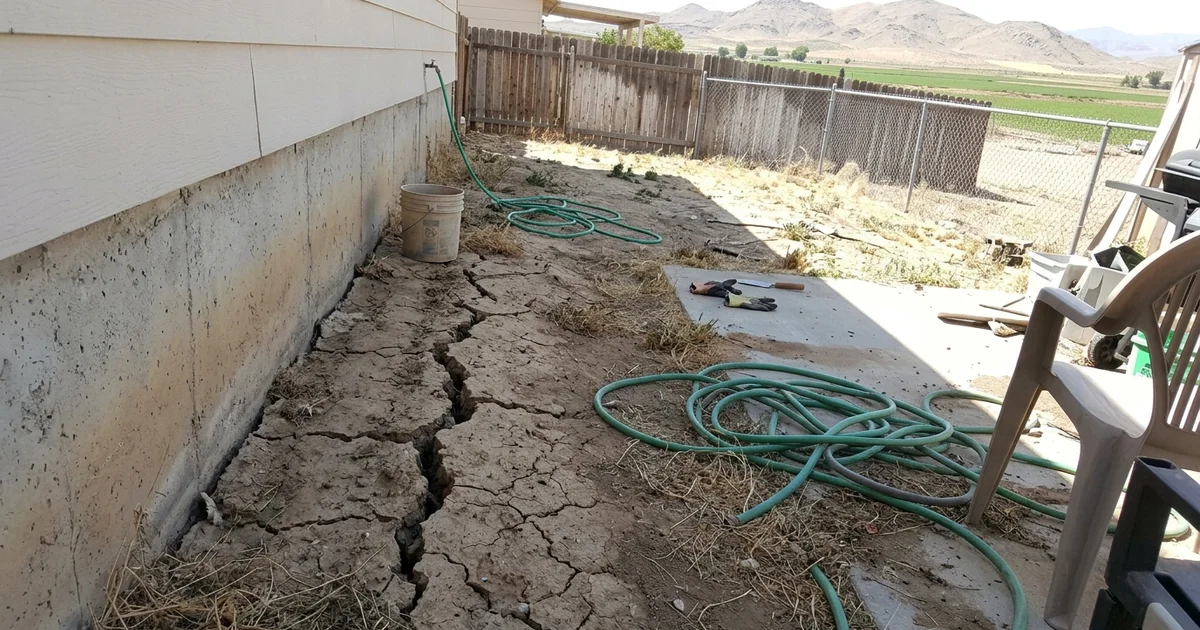
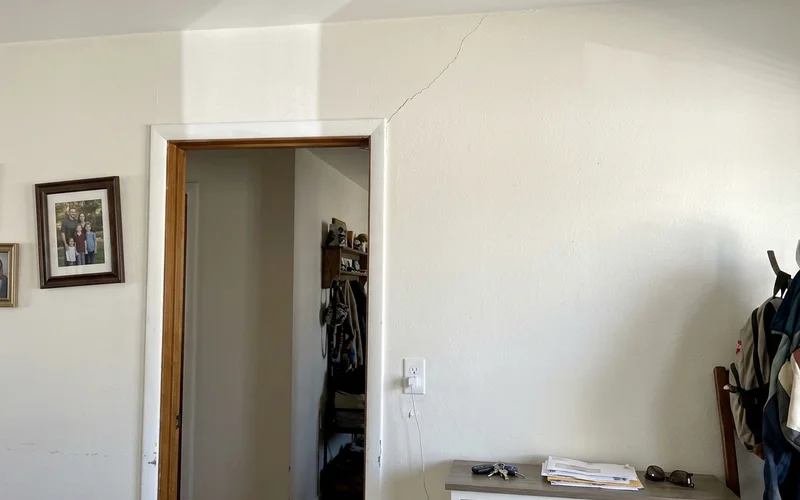
A crack wanders across the hallway tile. A bedroom door that closed fine last winter now drags in the summer. A diagonal line appears in the drywall above a doorway. Is water leaking under the house, or is the ground moving? The answer decides who you call, because one is a plumbing problem and the other usually is not.
Three Bullhead City homes, three different answers
Home 1: the dry crack. A single-story house with a drip-irrigated yard. The owner notices a new crack in the kitchen tile. The water bill is normal, the crack is bone dry, and two interior doors started sticking around the same time. By January the doors swing freely again. Most likely soil movement.
Home 2: the warm floor. An older home on a slab. A similar crack shows up, but the water bill jumped last month, the tile beside the crack feels warm in the morning, and at night, with everything off, there is a faint hiss. Most likely a hot-water slab leak.
Home 3: both at once. A home with a crack, a slightly higher bill, and sticking doors. The soil around one corner of the foundation is damp even though the sprinklers on that side are off. Probably a leak that is soaking the soil and causing it to move. This is the case that most needs a test.
Seven clues, side by side
| Clue | Points to a leak | Points to soil movement |
|---|---|---|
| Water bill | Jumped with no change in use | Normal |
| Floor temperature | Warm patch with no heat source | Normal |
| Sound with every tap off | Hiss or running water | Silent |
| Moisture | Damp flooring, baseboards, or soil in dry weather | Cracks stay dry |
| Timing | Getting steadily worse | Shifts with the seasons, sometimes partly closes |
| Doors and windows | Usually unaffected | Stick at certain times of year |
| Crack pattern | Clustered in one area | Radiating from door and window corners, often matching exterior stucco cracks |
A leak tends to affect one area because the water escapes from one point. Soil movement tends to affect the house more broadly.
Why they get tangled
Each can cause the other. Moving soil flexes the pipes under a slab until one fails, and a leak then soaks the soil and makes it move more. When both are present, fix the leak first, because the water is feeding the movement.
The test that settles it
Step 1: meter check (you). Turn off every fixture, irrigation zone, and the softener, then watch the low-flow indicator at the meter for a few minutes. Movement means water is leaving the system. The full steps are in how to tell if you have a slab leak.
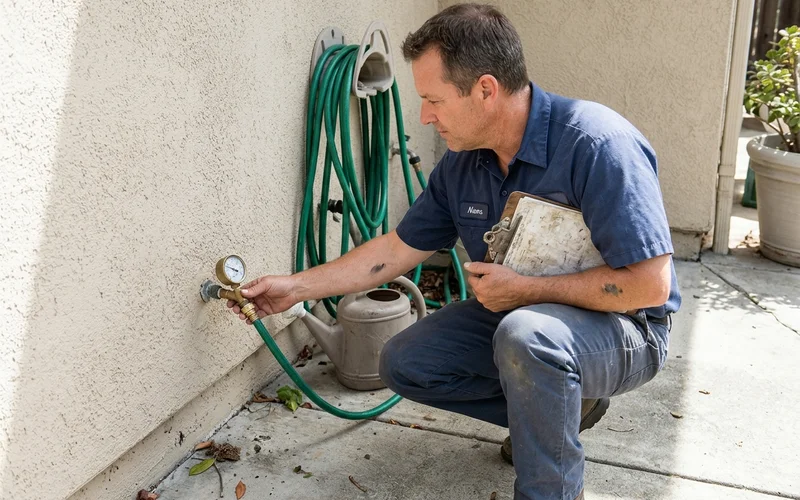
Step 2: isolated pressure test (plumber). The supply system is isolated and pressurized, often through a hose bib, and the gauge is watched. A steady gauge means no supply leak. A falling gauge confirms one, and how fast it falls hints at the size.
Step 3: locating (plumber, only if the test fails). Acoustic listening, thermal imaging, and line tracing find the escape point, so only that spot gets opened.
If the gauge holds, you do not have a supply-line leak, and nobody should be breaking your floor looking for one.
What to do with the result
It is a leak. Repair runs from a spot repair through the slab to rerouting the line through walls or the attic. Rerouting is common when the under-slab run has more than one weak spot.
It is soil movement. Plumbing is not the fix. Keep downspouts discharging well away from the foundation, avoid soaking the soil right against the house, and aim for steady rather than on-and-off watering. If cracks keep widening, call a foundation professional.
It is both. Stop the leak first, then give the soil time to stabilize before judging how much structural work remains.
A note for part-year owners
Coming back after a summer away to new cracks is common, and it is not automatically a leak. Run the meter test before anything else. If the meter holds still and the cracks are dry, watch them over a few weeks and note whether they change.
Our leak detection and slab leak repair service starts with exactly this testing. Call Bullhead City Plumbing Pros at 928-555-0100 any time, in English or Spanish. The automated assistant takes down what you are seeing and routes it to a local plumber. Ask about any service call fee before booking.