A toilet that runs in the middle of the night. A bathroom faucet that drips no matter how hard you crank the handle. A disposal that hums and does nothing. These are the plumbing problems that live on a to-do list for months, and they almost always get more expensive the longer they wait. A rocking toilet slowly ruins the subfloor. A drip becomes a cartridge that will not shut off at all. A seized valve turns a simple faucet swap into a whole-house shutoff.
Fixture repair in Bullhead City has one more factor working against you: hard water that wears parts out on a faster schedule than manufacturers plan for. Bullhead City Plumbing Pros answers 24/7 in English or Spanish and routes your request to a local plumber who finds the part that failed, replaces it properly, and tells you plainly whether the water is going to keep doing it.
Hard Water Is Usually the Real Culprit
The local supply comes from the Colorado River and carries a heavy mineral load. Calcium and magnesium leave white crust on anything that stays wet, and inside a faucet they act like a fine abrasive on every sealing surface. Homeowners often end up on their second or third faucet within a few years and assume they bought a bad brand. Usually, it is the water.
It shows up in every kind of house. In older neighborhoods, chrome fixtures develop crusted aerators and handles that grind. In newer subdivisions, homes only a few years old already have cartridges sticking and shower heads losing pressure. The parts pulled out of your fixture usually tell the story clearly. If you are curious about your own water, check the reading at the tap or in the city’s current water quality report.
Toilet Trouble: What Each Symptom Means
- It runs on its own. A worn flapper, a fill valve that will not shut off, or a pitted flush valve seat. If the tank and bowl are sound, a rebuild fixes it.
- Weak or partial flushes. Often scale clogging the rim holes and siphon jet, a supply stop that is partly closed, or a flapper dropping too early.
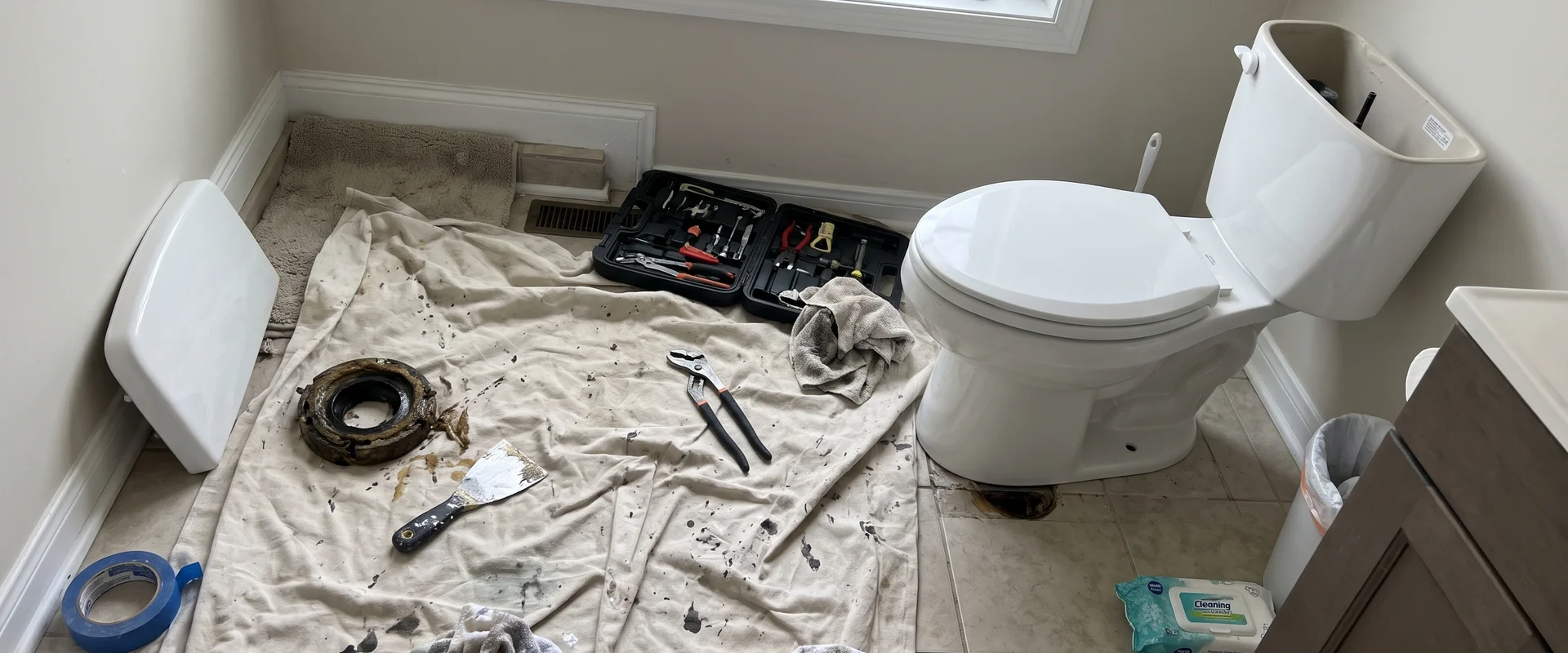
- Rocking or seeping at the base. Loose closet bolts or a low flange. The toilet gets pulled, the flange checked, a new wax ring set, and the bowl leveled so it stays sealed.
- A crack in the bowl or tank. Porcelain cannot be repaired. A new toilet gets fresh supply lines and a working shutoff.
Faucets and Garbage Disposals
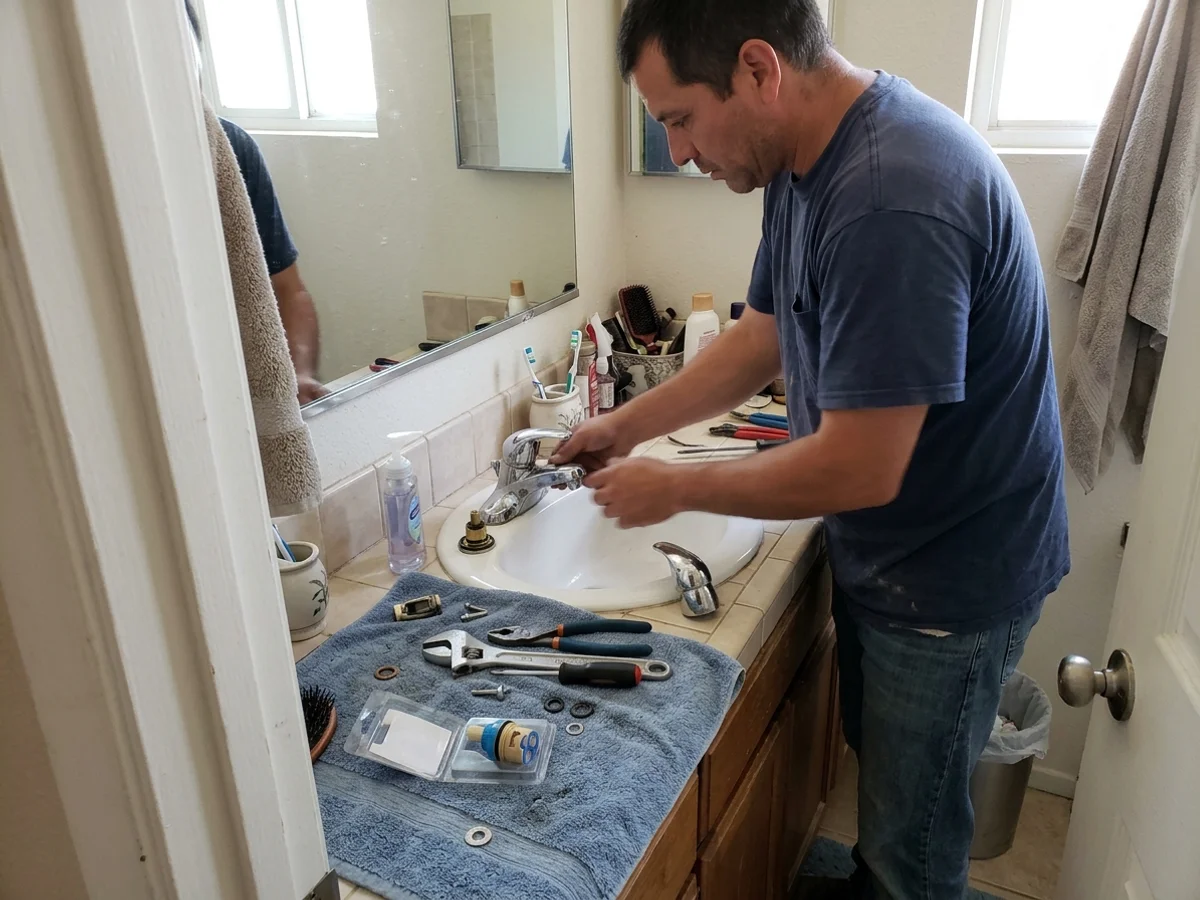
Most faucets use either a ceramic disc cartridge or a seat and spring assembly. When scale builds on those surfaces, they stop sealing, start to grind, and eventually stick. A drip from the spout or a stiff handle usually means the cartridge is going. If the body is solid and parts are available, a new cartridge or seat set brings it back. Kitchen, bath, tub, shower, and utility faucets are all covered, along with full installation of new fixtures.
Disposals tend to fail in a few recognizable ways:
- Humming but not turning: a jam, often freed with the hex socket underneath once the power is off.
- Tripping the reset: the motor is overheating or wearing out.
- Leaking at the sink flange or drain connection: a reseal or new gasket.
- Leaking from the bottom of the housing: the internal seal has failed and water is reaching the motor. That is a replacement.
The Shutoff Valve Under Your Sink
Almost every fixture job starts with the small angle stop on the wall under the sink or behind the toilet. In older homes, many of those valves have not been turned in years and are crusted solid with mineral scale. Forcing one is the most common way a simple DIY project becomes an emergency call. If a stop fights you, leave it and call.
When a plumber is already working on a fixture, a crusted or corroded stop gets replaced as part of the job. A quarter-turn valve that actually closes is cheap insurance for the next time something leaks.
Flapper swaps, aerator cleaning, freeing a jammed disposal, and tightening a toilet seat are all reasonable to handle yourself. A rocking toilet, a seized cartridge, a disposal leaking from the housing, or any new install where the supply lines are old are worth a call.
Rebuild or Replace? A Quick Decision Table
| Fixture Condition | Usual Action | Why |
|---|---|---|
| Worn flapper or fill valve | Rebuild | Inexpensive parts, tank is still sound |
| Cracked toilet bowl or tank | Replace | Porcelain cracks cannot be repaired |
| Dripping faucet, good body | Rebuild | New cartridge restores the seal |
| Corroded faucet base or obsolete model | Replace | Parts unavailable or body failing |
| Disposal leaking from the bottom | Replace | Internal seal failure |
| Seized angle stop | Replace | A valve that will not close is a flood risk |
The default is to fix the failed part first. You can request a free estimate and ask about any service call fee before booking.
Fixture Checks for Winter Homes
If your Bullhead City home sits empty through the summer heat, fixtures deserve a quick look on both ends of the season. Before you leave, close the supply stops to toilets or shut the main, so a fill valve that sticks open cannot run for months. When you come back, watch each toilet refill and listen for one that keeps running, check under sinks for drips at the stops and supply lines, and run every faucet and shower for a minute. Traps that dried out in the heat refill as soon as water flows, which clears up most musty or sewer-like smells.
A whole-home softener can slow all of this wear down. Cartridges and seats last noticeably longer, shower heads stop clogging, and the water heater benefits too. Our fixture and hard-water guides explain the details without a sales pitch.
Fixture repair and installation are available across Bullhead City, Fort Mohave, and Mohave Valley, in English or Spanish.