Most clogs announce themselves slowly. The bathroom sink takes a little longer to empty, the shower leaves an inch of water around your feet, the kitchen drain gurgles after the dishwasher runs. Then one day the water stops moving altogether, or worse, it comes back up somewhere it should not.
Drain cleaning in Bullhead City is really two jobs. The first is getting water flowing again with the right equipment. The second, and the one that saves you money, is figuring out why the line closed up so it does not happen again in three months. Bullhead City Plumbing Pros answers the phone 24/7 in English or Spanish and routes your call to a local plumber who can do both.
When a Clog Stops Being a One-Time Thing
A single clog is usually about what went down the drain. A clog that keeps returning is about the pipe. If the same line has been cleared two or three times in a year, something inside it is catching waste, and another round of cabling only resets the clock.
The usual culprits are a belly, where a buried section has sagged and holds standing water; an offset, where two pipe sections have shifted and left a lip; cracks where roots have found their way in; or an old clay or cast iron section that has partly collapsed. None of these show up from the cleanout. They show up on a camera.
A self-leveling sewer camera travels the line and records it. You can watch the screen and see pipe material, joints, scale, roots, and any standing water for yourself. The camera head carries a small transmitter called a sonde, and a locator above ground follows its signal, so the exact spot and depth of a defect gets marked with paint. Sometimes the footage shows a sound pipe and a one-off blockage. That is a perfectly good answer to get, too.
What Desert Heat and Empty Winter Homes Do to Drain Lines
A lot of homes in Bullhead City are lived in for part of the year. When a house sits closed up through a summer well past 110 degrees, the water in its traps can evaporate, sediment settles in low spots, and grease that was clinging to the walls hardens in place. Then the owners come back, the house fills up, and lines that have not carried real flow in months get pushed hard all at once.
Hard Colorado River water adds to it. Minerals that build up inside water heaters and faucets also coat the hot side of drain lines, especially from dishwashers and washing machines. Over the years that scale combines with soap and grease into a rough lining that catches everything. Older neighborhoods with aging clay laterals have one more issue: tree and shrub roots that work into loose joints looking for moisture.
Branch Line or Main Lateral? Reading the Signs
Your symptoms tell the plumber which equipment to bring.
- One fixture is slow. The trap or branch line for that sink, tub, or shower is narrowing. Hair and soap in bathrooms, grease and food scraps in the kitchen.
- A whole bathroom acts up together. A shared branch is restricted, often where that group ties into the main.
- Toilets gurgle when the washer drains. The line downstream cannot carry the flow, so air gets pulled through traps.
- Water rises in a tub or floor drain after a flush. The main sewer lateral is blocked below everything. Stop using water and call, any time of day or night.
Choosing the Tool: Cable, Jetter, or Camera First
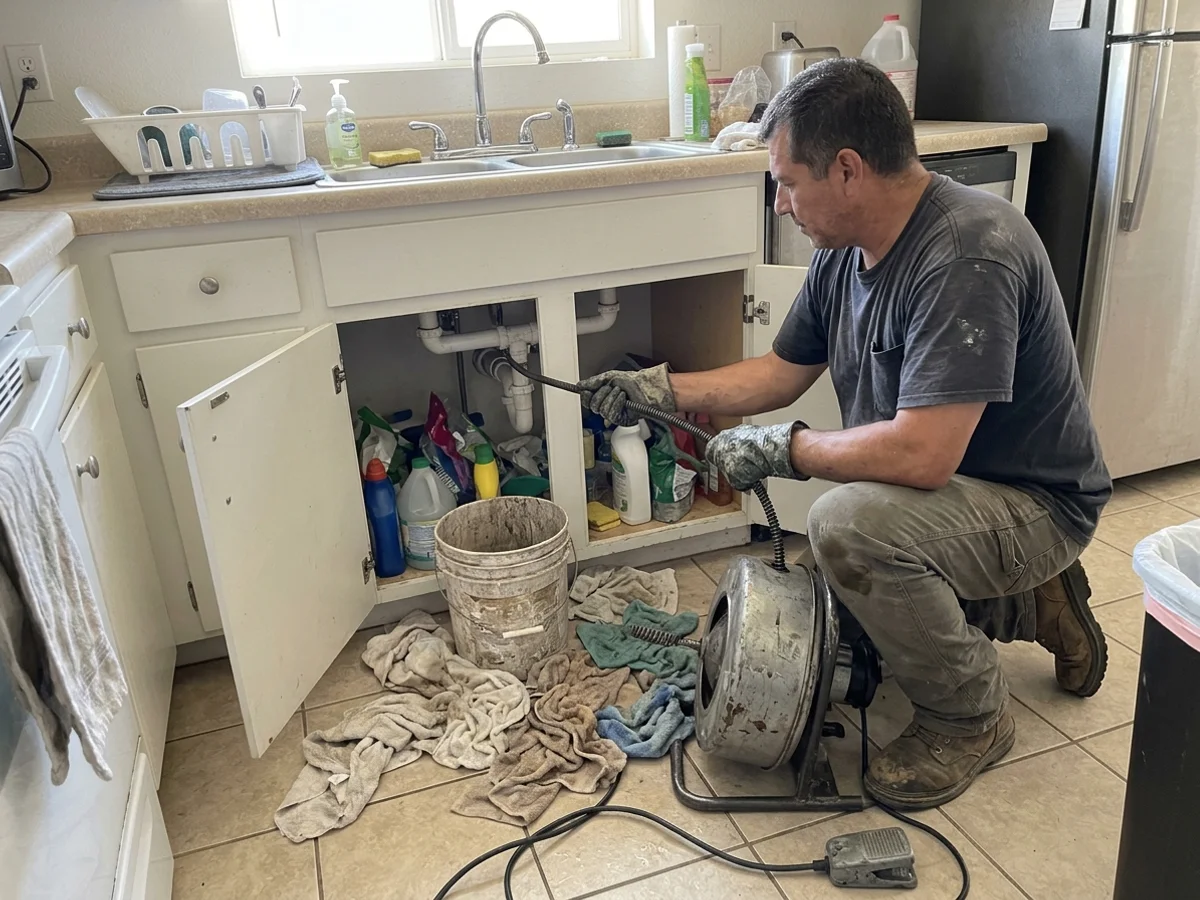
A drain cable spins a steel line with a cutting head through the pipe and breaks up the blockage. For a hair clog or a single food plug, it is quick and effective.
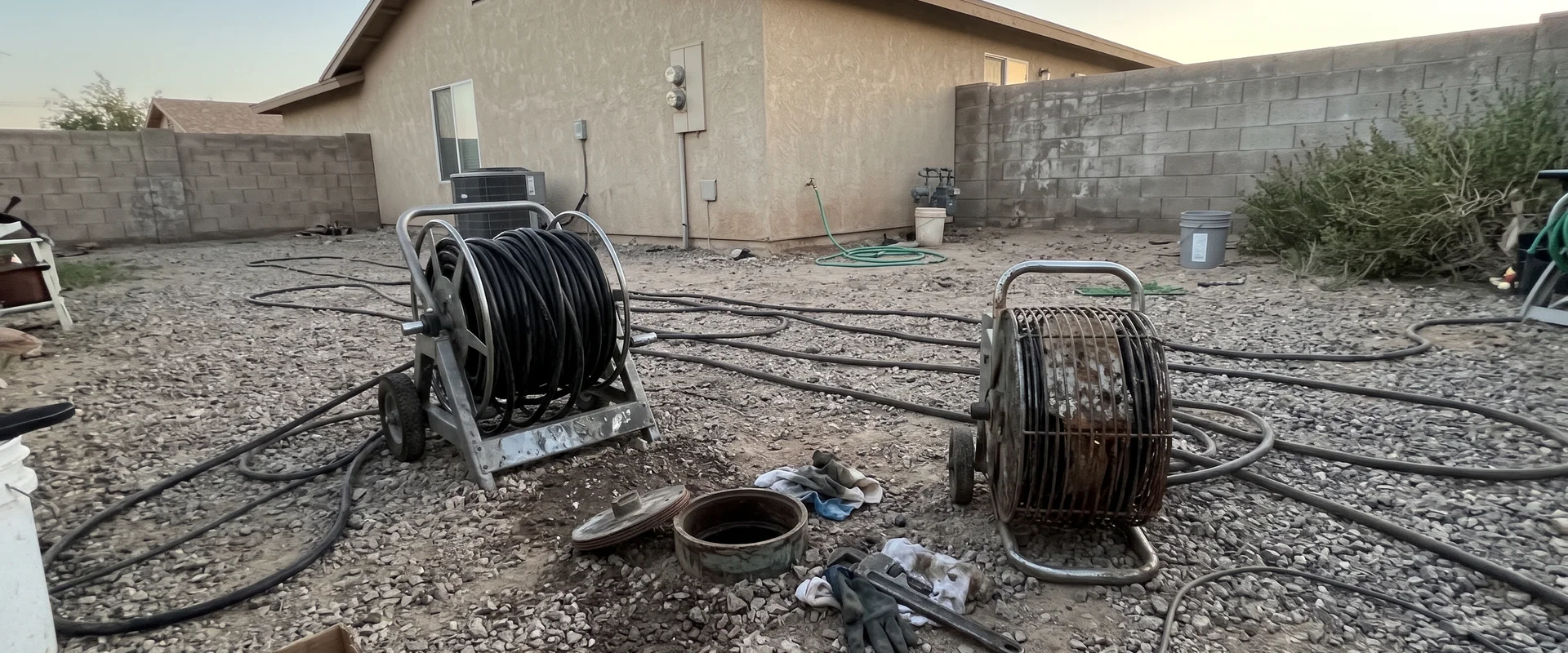
A hydro jetter sends high-pressure water through a nozzle that scours the full inside wall. It is the better tool for grease that coats the pipe, mineral scale, laundry sludge built from lint and detergent, and root masses that need to be cut back to the joint.
A camera comes first when the line is old, when it has backed up repeatedly, or when jetting might damage a fragile pipe. Knowing the condition before applying pressure protects you from turning a clog into a break.
What to Expect When You Call
You call 928-555-0100 and an automated bilingual assistant answers in English or Spanish. It asks which drains are affected, whether water is coming back up, and whether you have a cleanout you know of, then routes those details to a local plumber. On site, the plumber confirms the access point, clears the line, and runs a camera where the history calls for it. You can request a free estimate, and it is worth asking about any service call fee before you book so there are no surprises.
When Clearing Is Not Enough
If the camera confirms a failed section, there are generally two ways forward.
| Repair Method | Best For | Property Impact |
|---|---|---|
| Trenchless lining | Cracked or root-damaged pipe that still holds its shape | Minimal digging; driveways and landscaping stay intact |
| Excavation and replacement | Fully collapsed or badly offset lines | Trenching and surface restoration required |
A sound line with a temporary clog may only need a thorough jetting. Our drain cleaning guides compare these options in more depth.
Handle It Yourself or Call?
Plunging a single sink, pulling hair from a tub stopper, and running hot water after greasy dishes are all reasonable homeowner fixes. A few habits make things worse, though. Chemical openers seldom clear a real blockage and leave caustic water in the trap. Running the disposal to push grease through just moves the grease farther down the line. And ignoring gurgling toilets skips the earliest warning of a main line backup. If more than one fixture is involved, or water comes up through a drain, it is time for a plumber.
Drain clearing and sewer camera inspection are available throughout Bullhead City, Fort Mohave, and Mohave Valley. A backup coming into the house is a 24/7 call.