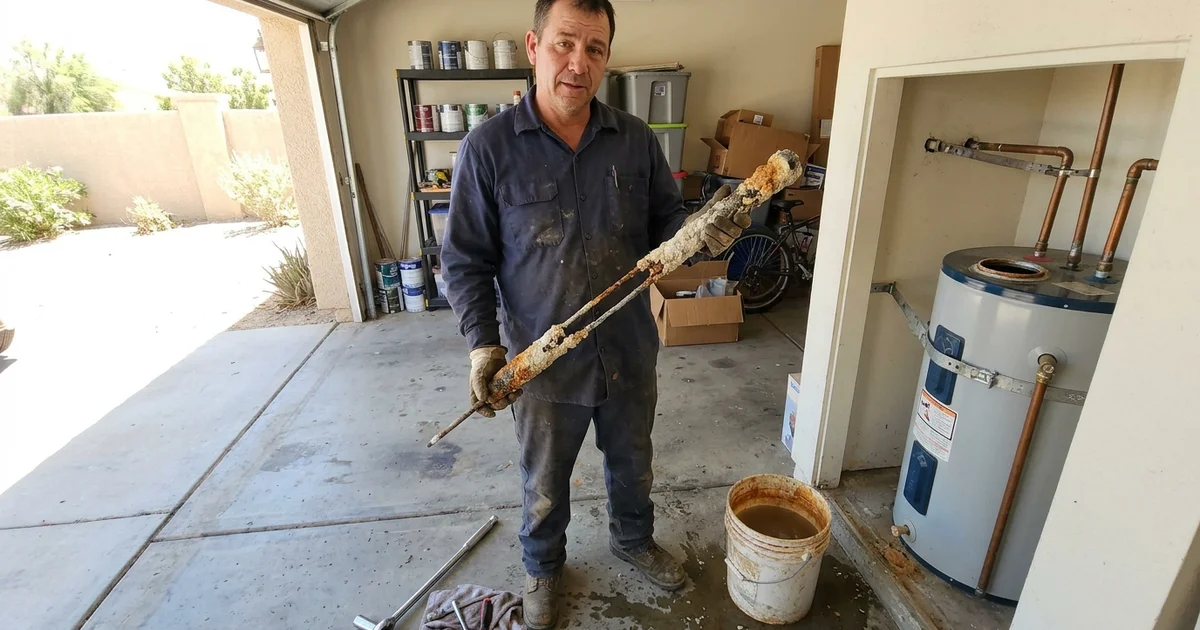
Every tank water heater has one part that quietly decides how many years you get out of it, and most owners have never seen it. The anode rod hangs from the top of the tank into the water, and its only job is to corrode so the tank does not. On the hard, mineral-heavy water that comes out of taps in Bullhead City, that job gets done faster than the label assumes.
So the real question is not what an anode is. It is whether your tank is worth a new one.
Three possible answers
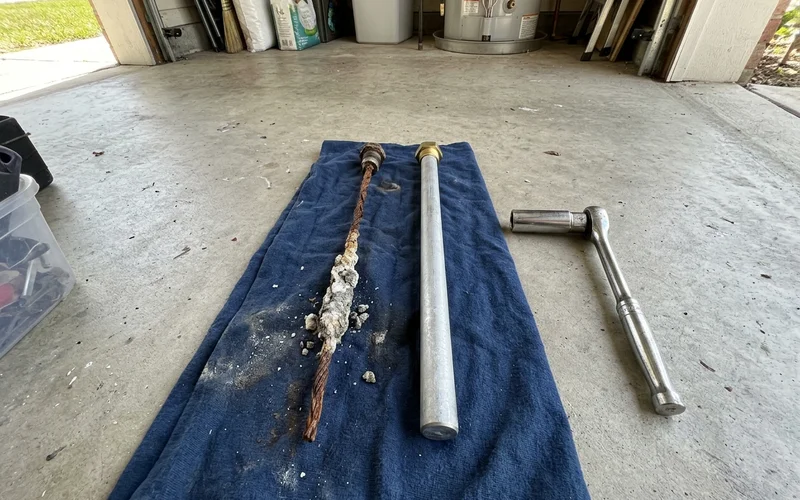
When a plumber pulls your rod, the result usually lands in one of three places:
- Rod is mostly intact. Put it back and recheck in a year or two. No spend beyond the inspection.
- Rod is worn to the core wire, tank is sound. Replace the rod. This is the case where a small part buys real years.
- Rod is gone and the tank is already rusting. A new rod slows things down but cannot undo internal corrosion. Start planning the replacement on your own schedule.
The rest of this guide helps you figure out which one you are probably looking at before anyone breaks the rod loose.
Signs that point to each answer
| What you notice | Most likely outcome | What to do |
|---|---|---|
| Water at the bottom seam or from the shell | Past saving | Shut off the cold inlet and fuel, then plan a replacement |
| Hot water runs tinted, cold runs clear | Rod gone, steel rusting | Rod only if the tank is fairly young; otherwise budget for a new heater |
| Tank is under about two-thirds of its rated life, no rust, no leak | Rod is the smart move | Pull and inspect it, replace if worn |
| Popping or rumbling while it heats | Heavy scale on the bottom | Flush and inspect the rod on the same visit |
| Never flushed, never inspected | Unknown | Assume it is due; a combined flush and rod check gives you the answer |
Why rods wear out sooner here
Hard water carries more dissolved minerals, and that makes it a better conductor. A better conductor speeds the reaction that consumes the rod. Add a heater sitting in a garage that bakes through a summer well past 110 degrees, and both the rod and any exposed steel corrode faster. Supply water also arrives warm for months, so the tank rarely gets a cool break.
That combination is a big part of the pattern in our guide on why water heaters fail early here.
The empty-summer factor
Many local homes are winter homes. A heater that sits full and idle from spring to fall still has corrosion working on the rod, with no fresh water moving through and nobody checking it. If you own a part-year home, the fall return is the natural time for a flush and rod check, before the tank goes back into daily use.
Choosing the replacement rod
| Rod type | Best fit | Trade-off |
|---|---|---|
| Aluminum-zinc | Untreated hard water, sulfur smell on the hot side | Slightly gentler protection, longer life |
| Magnesium | Softened water, or owners who want the strongest protection | Wears fastest on hard water |
| Powered (impressed current) | Owners who never want to check a rod again | Needs a nearby outlet and costs more up front |
| Flexible segmented | Garages or closets with low clearance above the tank | Same metals, just installs in tight spaces |
If your home already has a softener, ask about magnesium. Softened water is harder on the rod itself, but the tank also avoids the bottom scale that kills most heaters on this water.
What pulling a rod actually involves
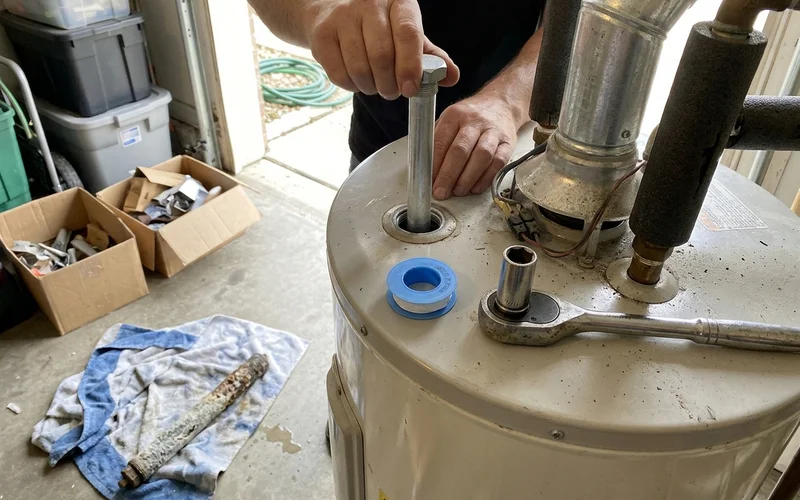
The rod is threaded into a port on top of the tank, and after years of heat and minerals it is often seized. The job means turning off gas or power, closing the cold supply, draining some water, and breaking loose a hex head with real force. Done wrong, that force can twist fittings or damage the top connections. It is why most owners leave it to a plumber and pair it with the annual flush.
Local expert insight
Ask for the old rod to be left out so you can see it. A rod that is badly consumed after two years on untreated water tells you more about your home’s water than any brochure, and it sets a realistic schedule for the next check.
Weighing it up
A rod is an inexpensive part compared with a new water heater, and checking it adds little time to a flush that should be happening anyway. Even two extra years from a sound tank usually makes it worthwhile. A leaking tank is the one case where you should skip the rod and go straight to replacement planning.
Rod checks and flushes are part of our water heater service. Call Bullhead City Plumbing Pros at 928-555-0100 any hour; the automated bilingual assistant notes the heater’s age and symptoms and routes them to a local plumber. Request a free estimate and ask about any service call fee before you book.