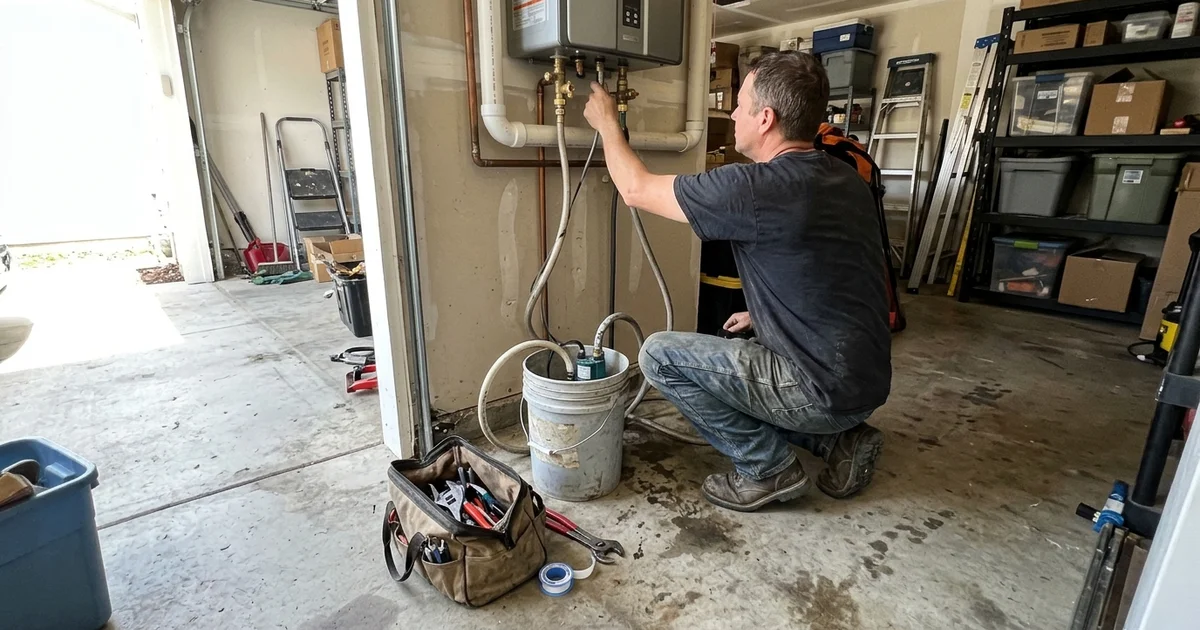
Tankless water heaters are sold on two promises: endless hot water and a long service life. Both depend on a heat exchanger with clear passages. On the hard water most homes in Bullhead City draw from the Colorado River, those passages scale faster than the installation manual assumes. The fix is not complicated. It is a schedule.
Your interval at a glance
| Household on untreated water | Suggested interval |
|---|---|
| 1 to 2 people, light use | Every 12 months |
| 3 to 4 people | Every 9 to 12 months |
| 5 or more, or long back-to-back showers | Every 6 to 9 months |
| Softener upstream, working properly | Every 18 to 24 months, confirmed by inspection |
| Part-year winter home | Every 12 to 18 months, done when you arrive |
| Already showing scale or overheat codes | Now, then restart the schedule |
If your unit has run more than a year and no one has descaled it, assume it is due. Treat these as starting points. The plumber who opens the unit will see how much scale actually came out and can tighten or relax the schedule from there.
Why tankless units scale faster than tanks
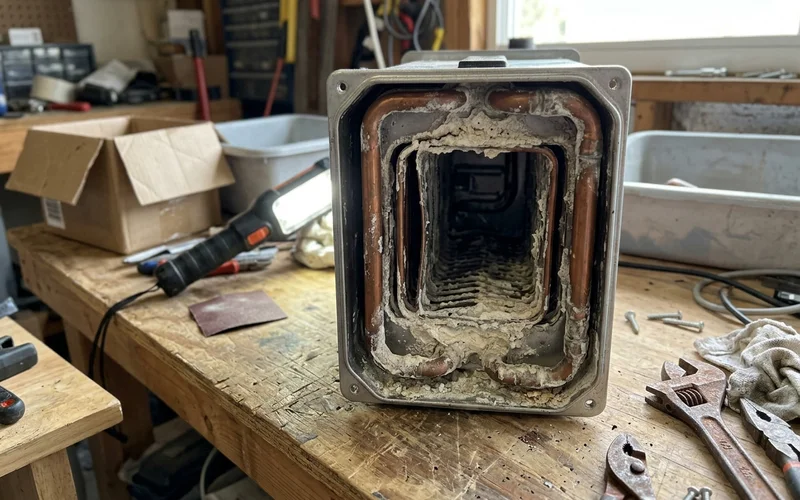
A tank heats forty or fifty gallons slowly, and sediment sinks to the bottom out of the way. A tankless unit takes cold water and heats it in seconds as it moves through narrow channels. That fast, intense heat is exactly what drives minerals out of solution, and in a channel that narrow, a thin layer of scale makes a measurable difference.
Three things that shorten your interval
- Water hardness. Check your reading at the tap or in the city’s current water quality report. The harder it reads, the more often you descale.
- Hot-water volume. More gallons heated means more mineral deposited. Families, frequent laundry, and long showers all count.
- Temperature setting. Higher setpoints drive scale out faster. If you have it set well above what you use, lowering it a little helps the heat exchanger.
The four warning stages
Scale announces itself in a predictable order:
- Efficiency slips. The burner works harder for the same output, and the gas bill creeps up. Most owners miss this stage.
- Temperature wanders. Showers run hot, then cool, then hot. Flow may weaken.
- Error codes. Many units flag scale, overheating, or low flow and shut down to protect themselves. Note the code from the display.
- Heat exchanger damage. An exchanger that overheats repeatedly can fail. At this point replacement often makes more sense than repair.
The goal is to descale during stage one, before you notice anything at the tap.
Winter home owners
Book the descaling for your arrival in the fall rather than your departure in spring. Water that sat in the unit through a hot, idle summer can leave deposits, and you want the exchanger clean for the months you actually use it.
What a descaling visit looks like
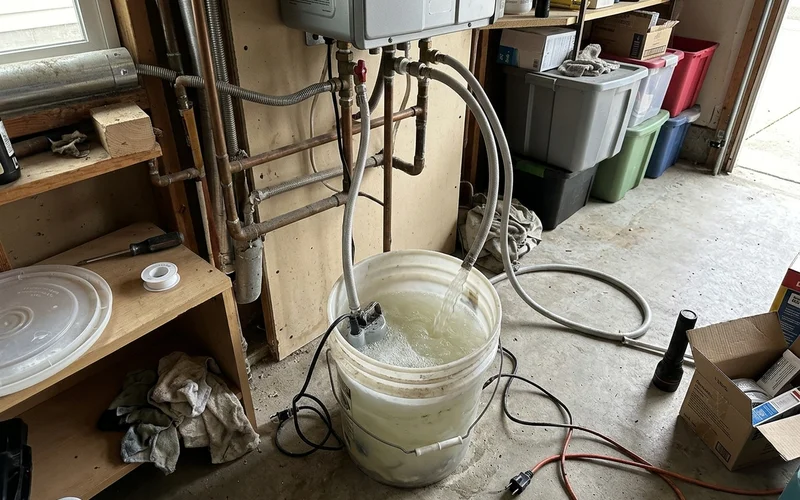
- Shut down and isolate. Gas or power off, isolation valves closed.
- Connect the pump. Hoses go on the service ports and run to a bucket with a small circulating pump.
- Circulate descaler. The solution runs through the heat exchanger, often 45 minutes to an hour depending on buildup.
- Rinse. Clean water flushes the solution out.
- Clean the inlet screen. The small filter on the cold inlet catches debris and gets scrubbed.
- Restart and check. Valves open, unit fires, temperature and flow are confirmed.
Most visits take one to two hours. If no isolation valves were installed, adding them comes first.
How softening changes the schedule
Softened water carries very little hardness into the heat exchanger, so scale forms far more slowly. That is the strongest practical argument for water softeners in a home with a tankless unit: you are protecting an expensive appliance, not just the shower glass.
| Untreated water | With a working softener | |
|---|---|---|
| Typical interval | 6 to 12 months | 18 to 24 months |
| Heat exchanger risk | Higher | Much lower |
| Efficiency between services | Drifts down | Stays closer to rated |
Book it before the error code
Descaling is part of our water heater service. Call Bullhead City Plumbing Pros at 928-555-0100 any hour, in English or Spanish. If the unit is showing a code, read it to the automated assistant so the local plumber knows what to expect. Request a free estimate and ask about any service call fee before booking.