Three types of water treatment get sold side by side, and they sound interchangeable. They are not. Each one fixes a different problem, and buying the wrong one leaves you with exactly the issue that sent you shopping. This guide works backward from what you are noticing at home to the system that actually addresses it.
Name the problem first
| What you see, taste, or smell | The underlying problem | The system that fixes it |
|---|---|---|
| White crust on fixtures, heater popping or failing early, seized valves | Hardness | Softener |
| Water tastes flat or off; you buy bottled water; coffee and ice taste wrong | Dissolved solids, taste | Reverse osmosis at the kitchen tap |
| Grit in aerators, cloudy water after utility work, chlorine smell in the shower | Sediment, chlorine | Whole-house filter |
| Several of the above | More than one problem | A combination, installed in the right order |
The supply in Bullhead City is hard Colorado River water, so the first row applies to most homes. Confirm your own reading at the tap or in the city’s current water quality report before buying.
The three systems in plain terms
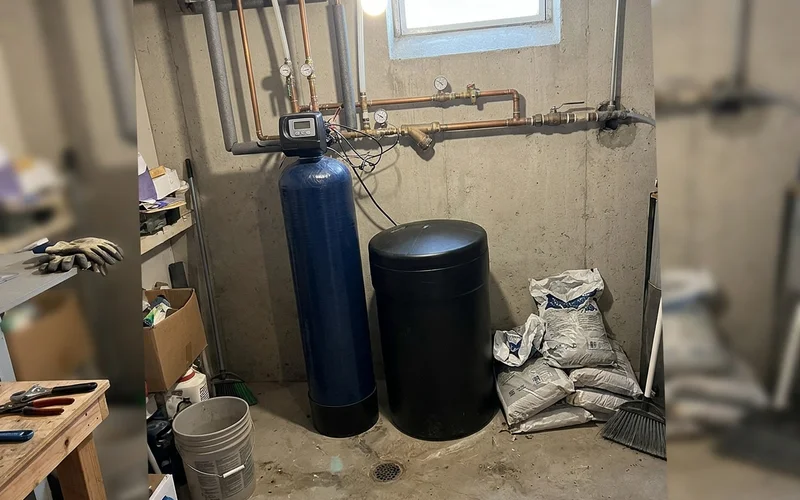
Softener (ion exchange). Installed where water enters the house. Resin beads swap calcium and magnesium for sodium, then the unit cleans itself with brine. It is the only one of the three that protects the whole plumbing system from scale.
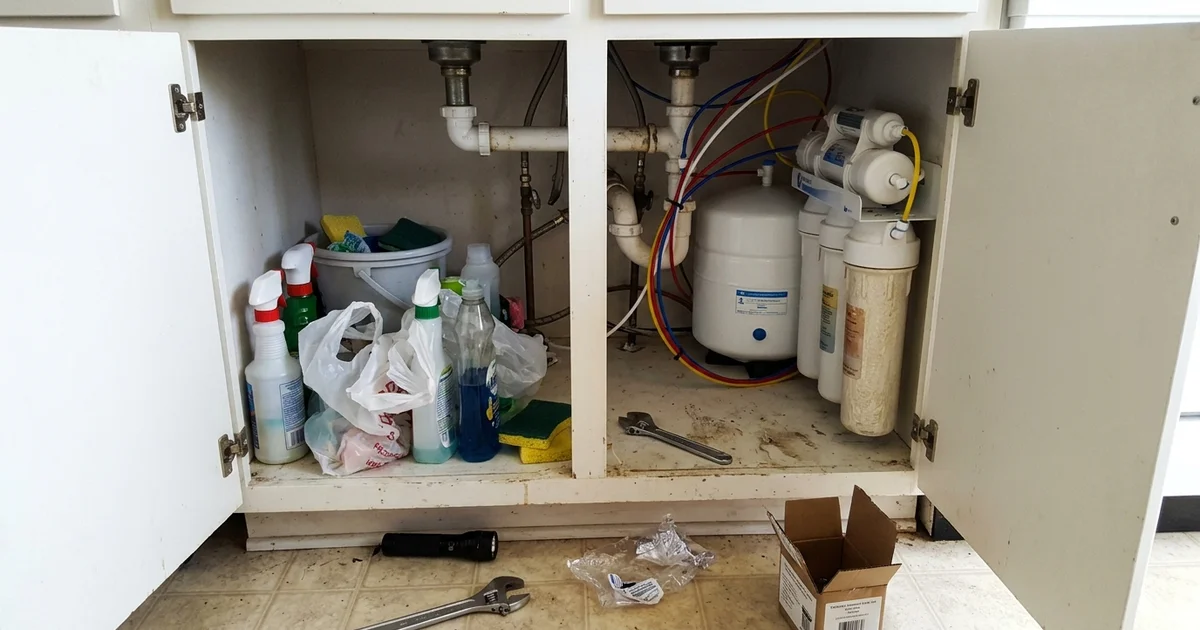
Reverse osmosis. Usually under the kitchen sink with its own small faucet. Water is pressed through a very fine membrane that rejects most dissolved solids, and clean water collects in a small tank. Excellent for drinking and cooking; does nothing for the rest of the house.
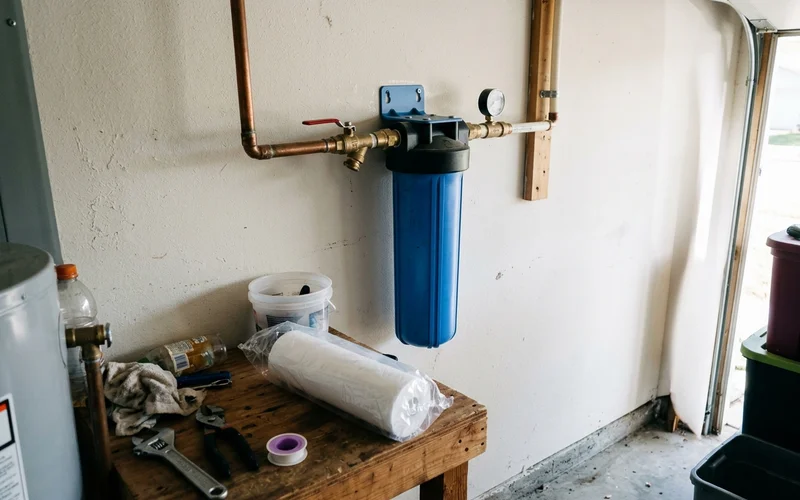
Whole-house filter. Cartridge housings on the main line, usually sediment plus carbon. It cuts grit, chlorine taste, and odor at every fixture but leaves hardness untouched.
Seven criteria, three systems
| Criteria | Softener | Reverse osmosis | Whole-house filter |
|---|---|---|---|
| Removes hardness | Yes, whole house | Yes, one tap only | No |
| Protects the water heater | Yes | No | No |
| Protects faucets and valves | Yes | No | Sediment only |
| Improves drinking taste | Slightly | Greatly | Somewhat |
| Treats | Whole house | One tap | Whole house |
| Main upkeep | Salt every few weeks | Filter changes; membrane every few years | Cartridge changes every several months |
| Needs a drain | Yes | Yes, small | No |
If you install more than one, order matters
- Sediment filter first, if you have one. Grit shortens the life of everything downstream.
- Softener next, on the main line.
- RO last, under the sink, fed with softened water.
RO membranes foul faster on hard water, so a softener upstream also protects the RO. One practical tip: leave at least one outdoor hose bib and the irrigation line on untreated water. Desert landscaping does not need softened water, and there is no reason to spend salt on it.
Mistakes we hear about most
- “I have a softener and the water still tastes off.” You need an RO tap, not a bigger softener.
- “I have RO and my heater is still scaling.” RO only treats one faucet. The heater needs a whole-house softener.
- “I put in a filter and there is still crust everywhere.” Filters do not remove hardness.
- “Someone told me a salt-free unit softens water.” It reduces scale sticking but leaves hardness in. Our guide on salt-based vs salt-free covers when that is still reasonable.
Local expert insight
If the budget only covers one system, pick the one that protects equipment. Drinking water can be handled with a pitcher filter for now. A water heater cooking through a layer of scale in a 110-degree garage cannot wait.
A note for winter homes
Softeners and RO both sit idle when a house is closed for the summer. Put the softener in bypass before you leave, and plan to flush the RO system and replace its pre-filters when you return, following the manufacturer’s instructions.
Getting the right answer
Every water softeners and reverse osmosis visit should start with a test of your actual tap water and a question about what made you call. Bullhead City Plumbing Pros answers 24/7 at 928-555-0100 in English and Spanish. Request a free estimate and ask about any service call fee before booking.