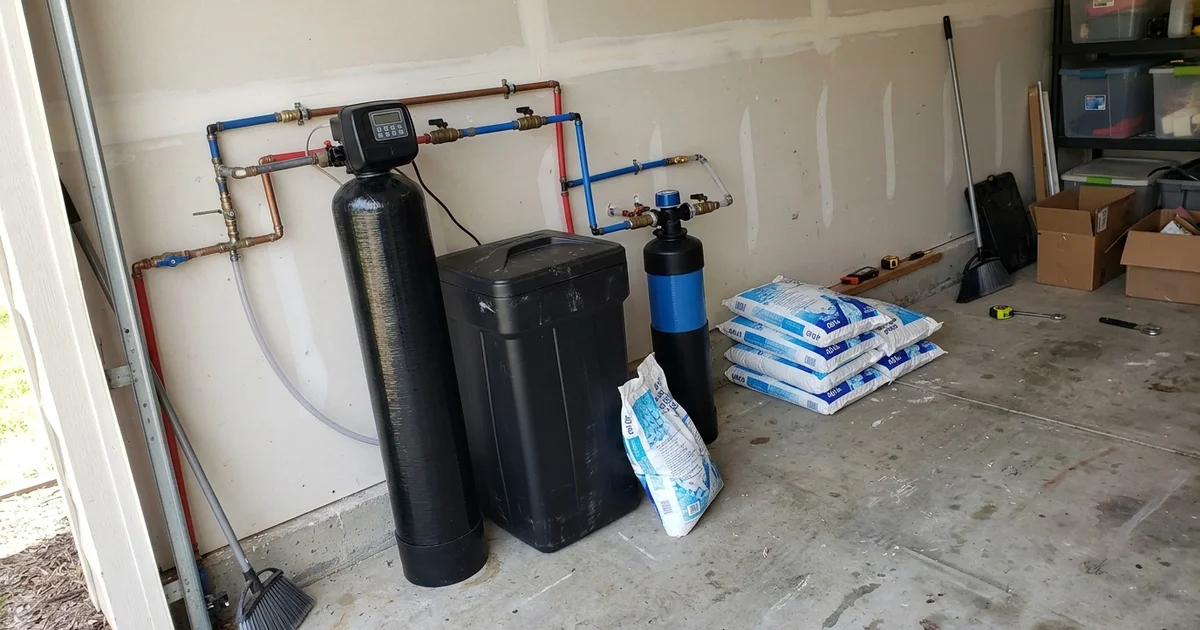
Most of the confusion starts with the name. A “salt-free water softener” sounds like a softener that skips the salt. It is not. It is a different technology doing a different job. Once you see what each one actually does, choosing between them for a home in Bullhead City gets much easier.
The short version
A softener takes hardness out. A conditioner leaves it in but makes it behave. Everything below follows from that one difference.
How each one works
Salt-based softener (ion exchange). Water flows through a tank of resin beads. The beads capture calcium and magnesium and release sodium in their place. When the beads are full, the unit rinses them with brine from a second tank and sends the captured hardness down the drain. Water leaving a softener tests close to zero hardness.
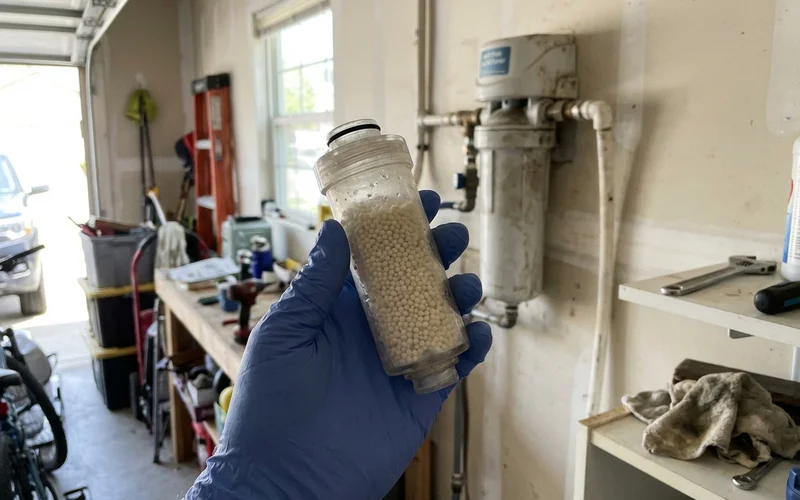
Salt-free conditioner. Most use template-assisted crystallization (TAC) media. Water passes over a material that coaxes dissolved minerals into tiny, stable crystals that are less likely to stick to pipes and heating surfaces. The minerals are still in the water, and a hardness test after a conditioner reads about the same as before.
Ten criteria, head to head
| Criteria | Salt-based softener | Salt-free conditioner |
|---|---|---|
| Removes hardness | Yes | No |
| Hardness reading after treatment | Near zero | About unchanged |
| Water heater protection on hard water | Strong | Partial |
| Crust and spotting on fixtures | Largely stops | Reduced, still present |
| Soap and detergent use | Noticeably lower | About the same |
| Existing scale | Slowly dissolves over time | Stays |
| Routine upkeep | Salt every few weeks, occasional service | Media change every few years |
| Water used for regeneration | Yes | None |
| Needs a drain nearby | Yes | No |
| Footprint | Resin tank plus brine tank | One compact housing |
Why hard water widens the gap
On mildly hard water, a conditioner can do a respectable job because there is less mineral to manage. Colorado River water carries a heavy mineral load, and every gallon that passes through your water heater brings more of it. That is exactly where the two technologies diverge most.
If you are shopping because hard water already ruined a heater, keeps seizing valves, or scales your tankless unit, pick the system that takes hardness out of the water. Before buying either, confirm your hardness at the tap or in the city’s current water quality report.
Five situations where salt-free is the better pick
- No one can handle salt. Forty-pound bags every few weeks are not realistic for every household, especially without delivery.
- There is no drain nearby. A softener needs one for regeneration discharge. Some manufactured homes and tight installs do not have one.
- Space is tight. A conditioner is a single slim housing.
- Sodium is medically restricted. The added sodium is small, but if a doctor says it matters, it matters. An RO tap for drinking water is another way around it.
- The home is used part of the year. A winter home with light use has less at stake.
What owning each one really looks like
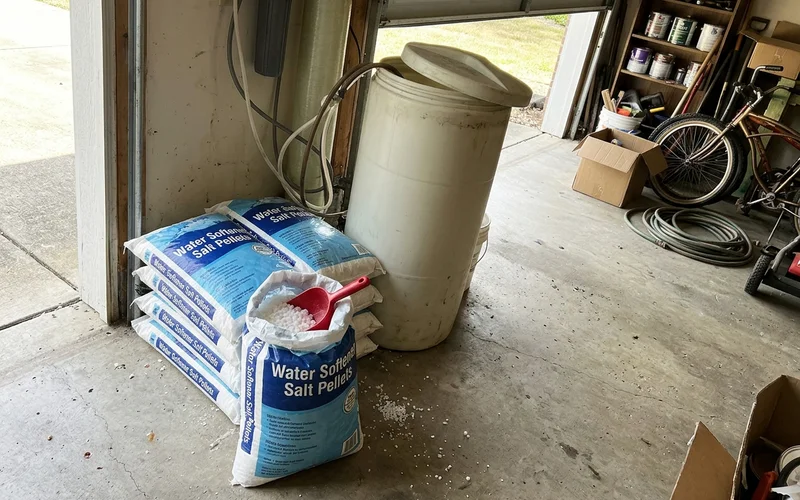
Salt-based: Look at the brine tank monthly and top it up, often every few weeks on hard water. The control valve needs occasional attention, and resin lasts many years in a correctly sized unit. An undersized softener regenerates too often, uses more salt, and wears out its resin early. See our guide on softener sizing.
Salt-free: Replace the media on the manufacturer’s schedule, typically every few years. Nothing in between.
Local expert insight
In summer, garages here pass 110 degrees. Put the brine tank where you can reach it easily and where the salt stays dry, because a tank that is hard to fill is a tank that runs empty.
The verdict
For most homes, a salt-based softener is the system that actually solves the problem. A salt-free conditioner is a legitimate choice when salt, space, or drainage rules a softener out, as long as you know it reduces scale rather than removing hardness.
Our water softeners and reverse osmosis service starts with a hardness test at your tap. Request a free estimate from Bullhead City Plumbing Pros at 928-555-0100, answered 24/7 in English or Spanish, and ask about any service call fee before booking.