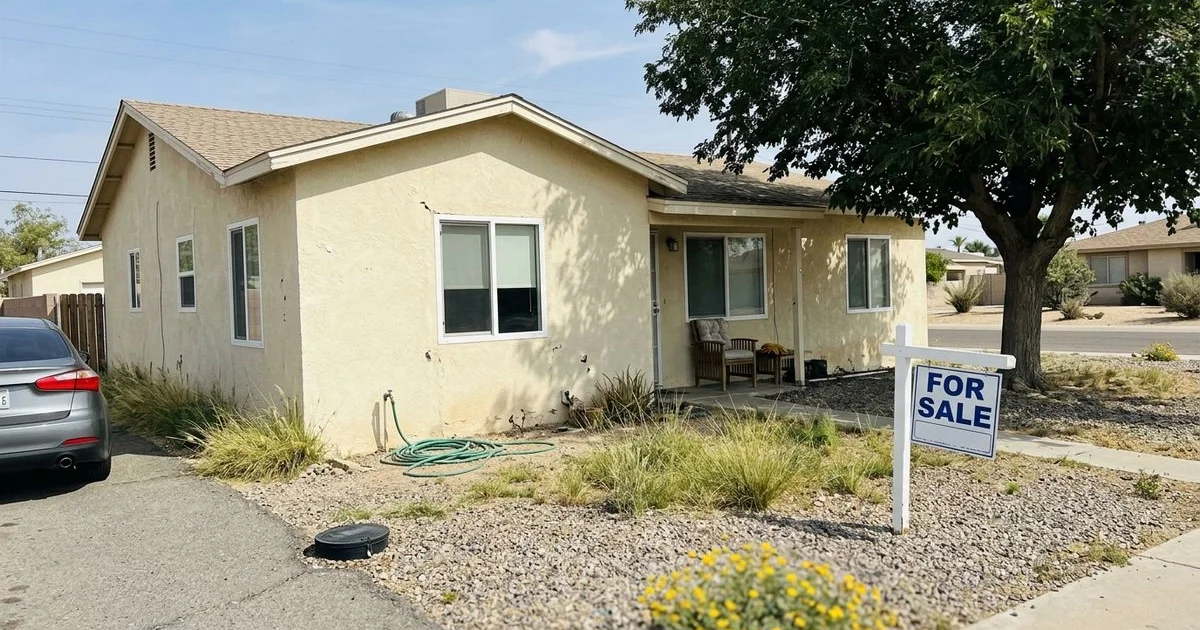
The pipe that carries everything from the house to the street is one of the most expensive components a buyer never sees. A general home inspection runs the faucets and confirms water goes down the drain. It does not show what is happening several feet under the gravel. In Bullhead City, two kinds of listings make that blind spot especially risky.
Scenario one: the older home with original plumbing
You have found an older place with mature trees and an original drain line. Decades in the ground means older pipe material, joints that roots have had years to find, and walls that may have thinned or cracked. The line can drain perfectly during a showing and still be a few heavy weeks from a backup.
What to ask the listing agent: Has the line ever been cleared or repaired? Is there a cleanout, and where?
Scenario two: the winter home that sat closed
You are buying from an owner who used the house a few months a year. Lines that see light use can hide problems that only show once a household runs water every day: sags holding sludge, roots that grew undisturbed, or residue that hardened while the line sat dry through a hot summer.
What to ask: How many months a year was it occupied? Any backups in the first weeks after the owners returned?
Scenario three: the newer home that seems fine
On a newer build, a sewer scope is more optional. Plastic drain pipe does not corrode, but joints can still separate when desert soil settles, and construction debris occasionally turns up in new lines. If the price leaves no room for surprises, the inspection is cheap peace of mind.
General inspection vs sewer scope
| Item | General inspection | Sewer camera |
|---|---|---|
| Runs fixtures and checks drainage | Yes | |
| Looks at visible pipes under sinks and in the garage | Yes | |
| Sees inside the buried line to the street | Yes | |
| Identifies pipe material along the run | Only at visible sections | Yes |
| Finds roots, cracks, sags, offsets | Yes | |
| Marks the problem location and depth from above | Yes | |
| Gives you video to share with the seller | Yes |
What the camera turns up
- Pipe material along the whole run, which hints at its age
- Root intrusion at joints
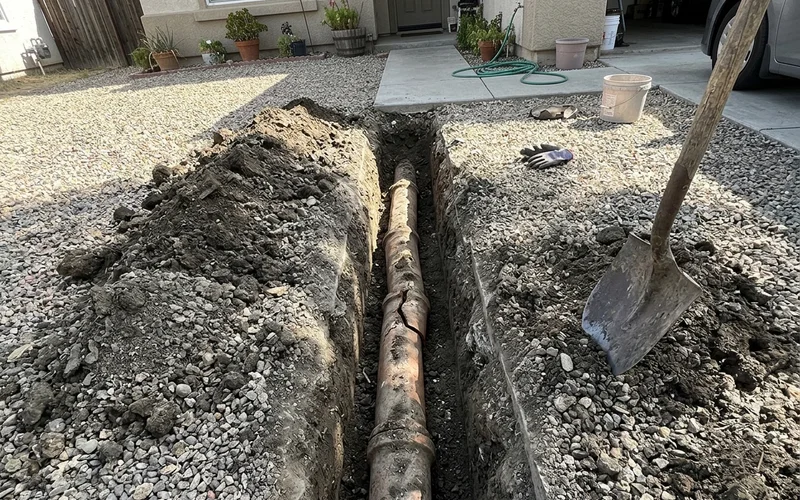
- Cracks and breaks that let water out and soil in
- Bellies, low spots holding water and sludge
- Offset joints where sections have shifted
- Grease or scale narrowing the pipe
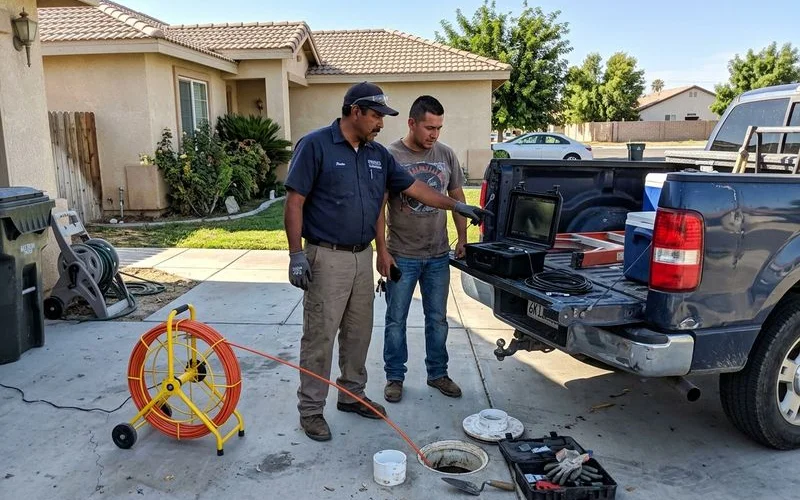
A transmitter in the camera head lets the plumber mark the exact location and depth of any problem on the surface. That makes repair quotes far more precise when you negotiate.
Turning findings into an escrow decision
| Finding | Typical next step |
|---|---|
| Clean line, sound material | Close with confidence; keep the video |
| Minor roots, otherwise sound | Plan maintenance clearing; may not affect price |
| Cracked but aligned section | Get a repair quote; ask for a credit or seller repair |
| Belly, offset, or collapse | Get a repair quote now; renegotiate or reconsider |
Our guide on trenchless sewer repair vs dig and replace explains which repair fits which finding, so you know what you are negotiating over.
Scheduling inside escrow
- Book it with the general inspection, well inside your contingency window.
- Confirm there is a cleanout. Without one, the camera may have to go in through a pulled toilet, which needs the seller’s permission.
- Ask for the full video file, not just a summary. Any contractor quoting a repair can then review the line without another inspection.
- Ask about fees up front, including whether the line needs clearing first for the camera to pass.
Local expert insight
Many buyers here are purchasing from out of state. Ask to have the video sent to you directly so you can watch the footage yourself and share it with your agent before the deadline.
Camera inspection is part of our drain cleaning and camera inspection service. Call Bullhead City Plumbing Pros at 928-555-0100 at any hour, in English or Spanish, request a free estimate, and mention your escrow deadline so the visit fits your timeline.